Map your stop
What is the Ginza district in Tokyo? A guide for show night
Quick summary
The Ginza district in Tokyo is a shopping and theater district built on the site of an Edo-era silver coin mint, with a main street closed to cars on weekends.
Origin and habits
Open 14 stops
The Ginza room, its stations and the main street
Tap a route first, then a pin or stop, for its note and Google Maps.
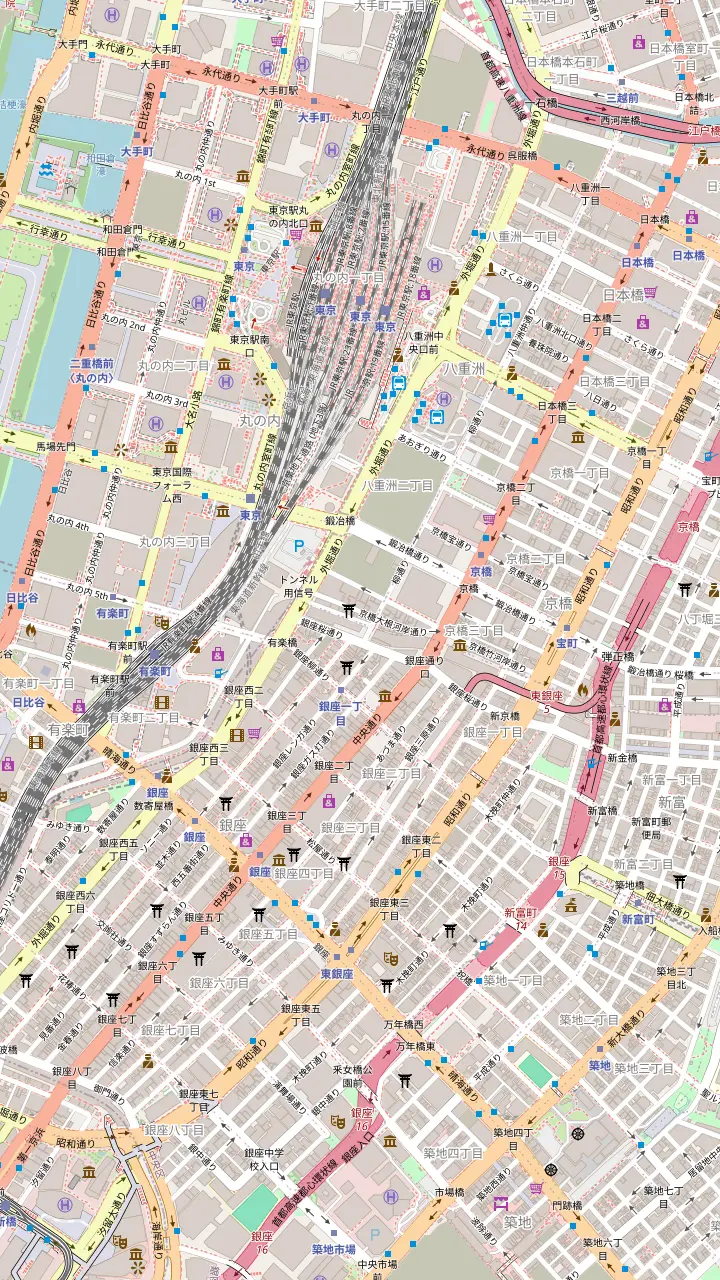
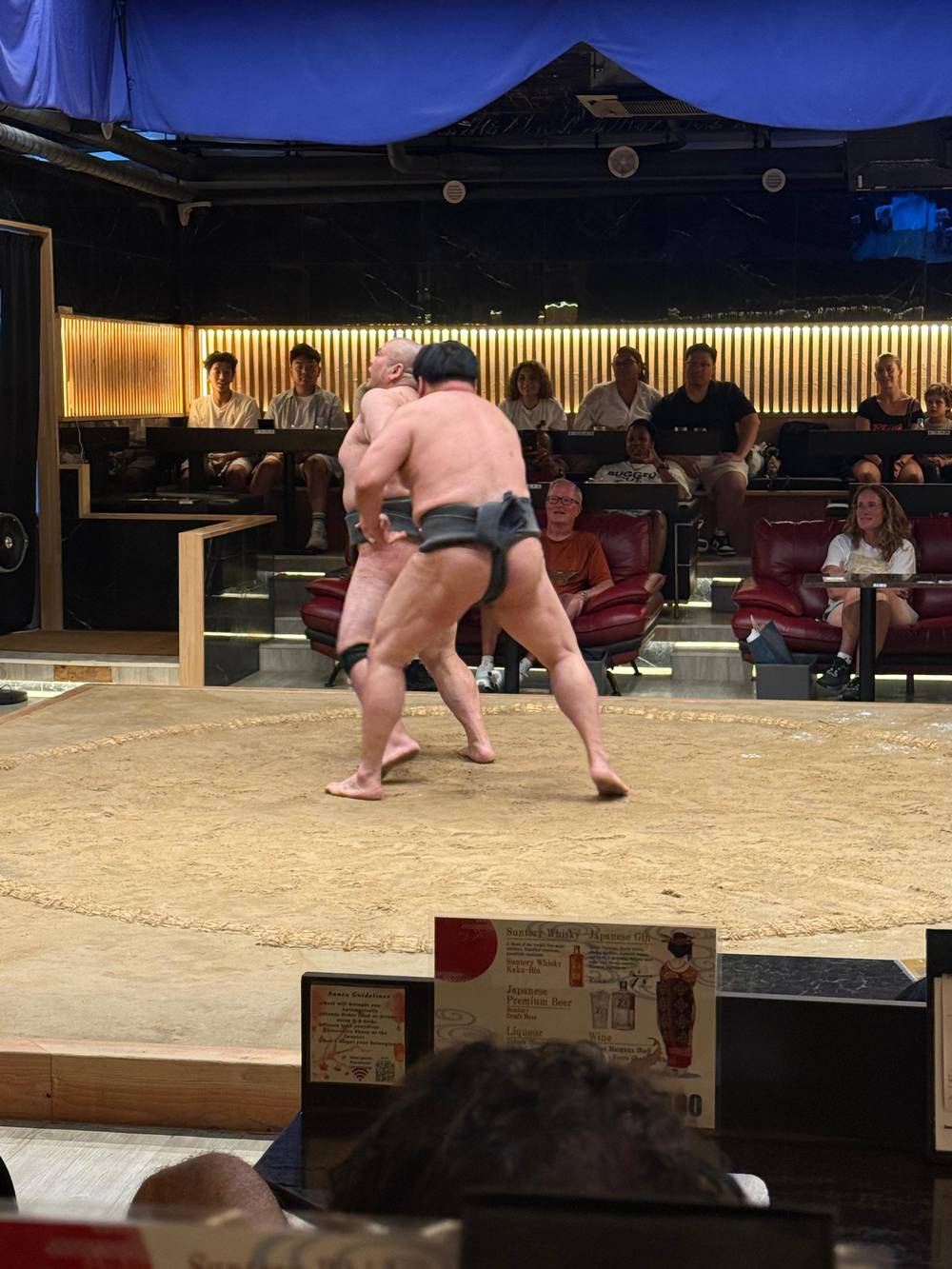
The room is on the first basement floor of a building at 1-9-13 Ginza.
Google MapsExit 10 is a 1-minute walk from the door.
Google MapsExit A13 is a 4-minute walk from the door.
Google MapsExit 1 is a 5-minute walk from the door.
Google MapsExit A4 is a 6-minute walk from the door.
Google MapsThe Central Exit is a 7-minute walk from the door.
Google Maps
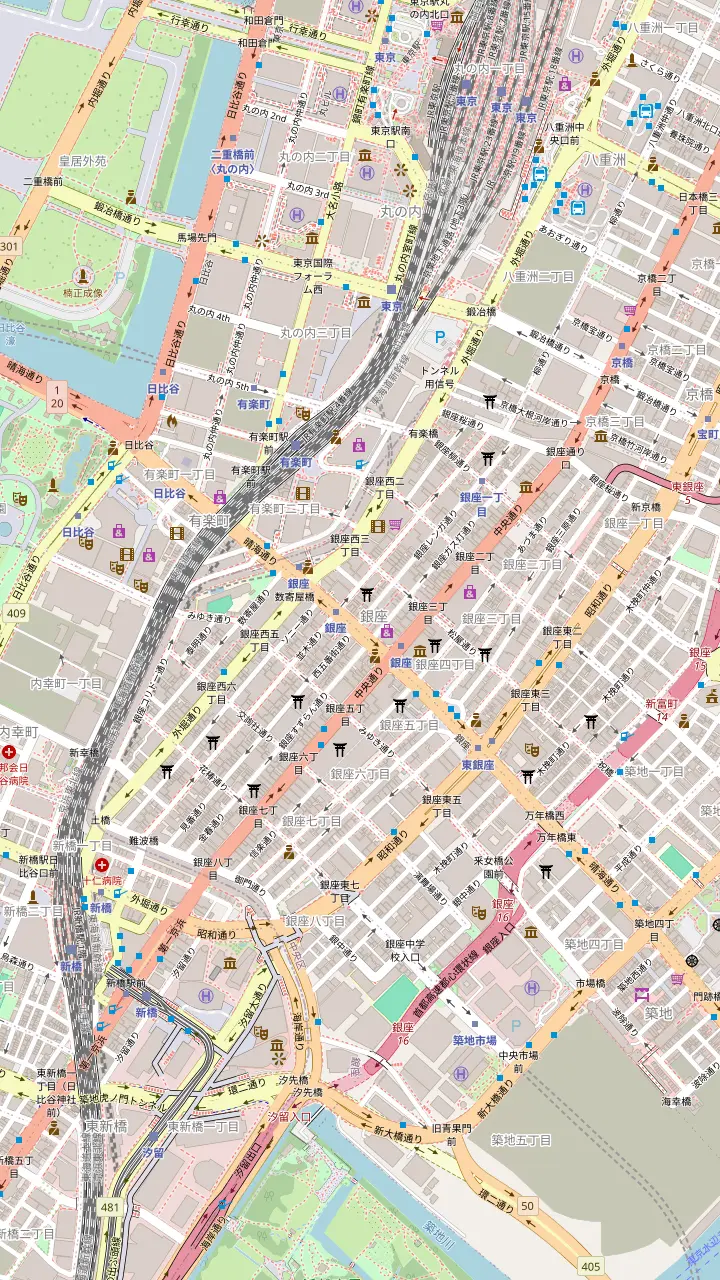
GO TOKYO suggests leaving Ginza Station through Wako or Mitsukoshi onto the main boulevard.
Google MapsMitsukoshi was founded in 1673 and Matsuya in 1869.
Google MapsMatsuya was founded in 1869, and both stores have basement food courts.
Google MapsThe theater is directly connected to Higashi-ginza Station.
Google MapsThe mall opened in 2017 with 20 restaurants and cafes and a rooftop garden.
Google MapsThe flagship has almost 4,000 square meters of floor space and a restaurant.
Google MapsAn alley of 11 bars that is open 24 hours a day.
Google MapsWhere the evening starts, at 1-9-13 Ginza.
Google Maps
Map data: © OpenStreetMap contributors
Ginza is a district built on a silver mint, rebuilt in brick and now known for department stores, kabuki and a car-free weekend street. This guide shows what to do before the sumo dinner and where to go afterward.
Editorial team, ginzasumoshows.com · Updated November 6, 2026 · Read in 6 min
The essentials
- NameGinza comes from a silver coin mint moved here in 1603.1
- Weekend streetThe main street is car-free on weekends and holidays, noon to 5 or 6 p.m.2
- KabukiKabukiza Theatre is directly connected to Higashi-ginza Station.3
- Late barsYurakucho's Sanchoku Yokocho has 11 bars and is open 24 hours.4
- The venueThe sumo room is a 1-minute walk from Ginza-itchome Station.5
What the Ginza district is
If you are asking what the Ginza district in Tokyo is, the short answer is that it is a district named after money. In 1603 the shogunate founded by Tokugawa Ieyasu moved its silver coin mint from Sunpu to what is now Ginza 2-chome.1 GO TOKYO puts it plainly: Ginza was built on the site of a silver coin mint dating back to the Edo era.6
The look of the place comes from a fire. After a huge fire in 1872, the area was reborn as a Westernized brick town built by the Meiji government, designed by the British architect Thomas James Waters.7 The main street was widened to 27 meters, more than twice as wide as before.8
Out of that grew a habit that still has a word. The phrase Gin-bura, meaning wandering around Ginza, emerged in 1915-16.9 It is the right attitude for show night, when Ginza sumo wrestling comes with dinner: arrive early, wander, then go down to the room.
Stops around the room
What to do near the venue
| Place | What it offers | Detail |
|---|---|---|
| Mitsukoshi and Matsuya | Historic department stores | Founded 1673 and 186910 |
| GINZA SIX | Shops, restaurants, rooftop garden | Opened in 201722 |
| Muji Ginza | World's largest flagship | Almost 4,000 square meters23 |
| Kabukiza | Kabuki theater | Single-act tickets24 |
| Sanchoku Yokocho | Regional bars | Open 24 hours4 |
| G Info | Tourist information | English assistance21 |
Places and details as stated by GO TOKYO, the Japan National Tourism Organization and Ginza Official.10
Getting around Ginza
Ginza Station is served by the Ginza, Marunouchi and Hibiya lines, and Ginza-Itchome and Higashi-Ginza stations are close.14 You can walk to the Ginza area in five minutes from JR Yurakucho Station and in around 15 minutes from Tokyo Station.15
The railway times are short. From Tokyo it is 3 minutes on the Marunouchi Line to Ginza Station, and from Shinjuku it is 16 minutes on the same line.16,17 From Haneda Airport it takes 35 minutes by limousine bus or 50 minutes by train.18 Narita Airport takes two hours by limousine bus or one hour 35 minutes by train.19
For the venue itself, the nearest exit is Ginza-itchome's exit 10, a 1-minute walk, while the larger Ginza Station's exit A13 is 4 minutes away.5,20 If you have a free hour before the show, get off at Ginza Station and walk; the distance is short enough to enjoy. G Info, the district's tourist information center, hands out maps and pamphlets in English and several other languages.21
Before the show: department stores and shops
Ginza is home to two historic department stores, Mitsukoshi, founded in 1673, and Matsuya, founded in 1869.10 Both give particular attention to their basement food courts, which makes them handy for a gift or a snack. GO TOKYO suggests leaving Ginza Station through the department stores Wako or Mitsukoshi onto the main boulevard.26
For modern shopping, GINZA SIX opened in 2017 with 20 restaurants and cafes, a Noh theater and a rooftop garden.22 The Muji Ginza flagship is the world's largest, with almost 4,000 square meters of floor space, and it includes a restaurant.23 These are places to browse while waiting for your seating time.
If you need help, G Info is the district's tourist information center. English assistance is available there, with maps and pamphlets in several languages.21 Start there if you want a shopping route rather than a wander, and then walk toward the venue near Ginza-itchome for the evening. The map above marks Wako, Mitsukoshi, Matsuya, GINZA SIX and Muji Ginza, so you can plan a loop that ends at the door.
Before or after
What do you want around the show?
Pick the plan that fits your evening
If I want to shop first
Department stores
Both historic stores have basement food courts.10
If I want some culture
A kabuki single act
Single-act tickets are sold on the day.24
If I want a drink after
Sanchoku Yokocho
It has 11 bars and is open 24 hours.4
If I want to stroll
The weekend street
It is car-free on weekends and holidays.25
If I need information
G Info
English assistance is available.21
The weekend street
On weekends and public holidays the main street becomes a pedestrian zone. It covers Ginza-dori from 1-chome to 8-chome, and it is open only to pedestrians on weekends and national holidays.25 The hours run noon to 5 p.m. from October to March, and noon to 6 p.m. from April to September.2 Decisions to cancel the zone for weather, or for the year-end and New Year breaks, are made by the police.33
The tradition is not new. Tokyo's first pedestrian zones, in Ginza, Shinjuku, Ikebukuro and Asakusa, were set up on August 2, 1970, at the suggestion of then-Governor Ryokichi Minobe.34,35 To commemorate the zone, a Yukata de Gin-bura Festival is held every August on Ginza-dori Street.36,37 The rules are simple: selling, events and gatherings are banned in the zone, and bicycles must be walked.38
For a sumo evening starting at 17:00, a weekend lets you stroll the street through the afternoon.12 In winter the zone closes at 5 p.m., just as the show begins, so do your walking earlier. In summer you have until 6 p.m., so a short pause for a drink is possible.
A Ginza day
From the street to the last bar
Noon
Weekend street opens
On weekends and holidays the main street closes to cars.2
Afternoon
Shops and sweets
Department stores have basement food courts.10
4:30 p.m.
Kabukiza evening show
The evening show starts relatively early.11
17:00
Sumo dinner begins
The evening show runs 17:00 to 19:00.12
19:00
Show ends
Late
Sanchoku Yokocho
An alley of 11 bars that never closes.4
Kabukiza next door
Kabukiza Theatre is directly connected to Higashi-ginza Station.3 Under a law passed in 1629, all kabuki casts are male, including the female roles played by onnagata.39 If you want a taste of another Japanese performing art before sumo, this is the closest. Kabuki goods and souvenirs can also be bought at Kobikicho Square without watching a performance.40
You do not have to sit through a full program. Kabukiza sets aside single-act tickets on the day of the show, and GO TOKYO notes tickets for individual acts are available if you do not have time for an entire performance.24,41 Same-day kabuki tickets are sold at the box office on the second basement floor, directly outside Exit 3 from Higashi-ginza Station.42
Be careful with the clock. The evening show at Kabukiza starts at 4:30 p.m., which overlaps with a 17:00 sumo seating, so a single act is the realistic combination.11,12 Availability varies by program, so buy in advance if you want to be sure of a seat.43
Video
Top things to do in Ginza, Tokyo
Tokyo Cheapo on YouTube · The video only starts loading on your tap.
Built on the site of a silver coin mint dating back to the Edo era (1603-1867)
Checklist
For a Ginza show night
After the show: Yurakucho and the late bars
After a 17:00 show that ends at 19:00, the evening is still young.12 GO TOKYO notes that more places to eat and drink line the area under the elevated tracks toward Yurakucho.44
For an indoor option, the Yurakucho Sanchoku Yokocho, renovated in 2019, has 11 bars specializing in regional cuisines and is open 24 hours a day.4 It is a 3-minute walk from Ginza Station, and the Yurakucho exit is 7 minutes on foot from the venue.4,30
Izakaya entrances are marked with red or white lanterns and cloth curtains called noren.45 If sushi is your plan instead, remember that some Michelin-starred sushi restaurants in Ginza have counter seats only and require reservations.32 The sake bar at the venue, open from 1 p.m., is the easy first drink.46 In a yokocho alley, some bars have cover charges and may serve a small appetizer instead of a seating charge, and izakayas serve small dishes, so the advice is to order several.47,48
Staying near the show
We sell no hotels, so this section is about geography rather than recommendations. Staying in Ginza itself keeps the show within a short walk, as the venue lists stations from 1 to 7 minutes on foot from its door.5,30 Choose the side of Ginza by the train line you use.
If you land at Haneda, Ginza is 35 minutes by limousine bus or 50 minutes by train, and from Narita it is two hours by limousine bus or one hour 35 minutes by train.18,19 From Tokyo Station, a hotel in Ginza is 3 minutes away on the Marunouchi Line.16 That tells you how central the district is.
Late nights matter when you choose a bed. The Sanchoku Yokocho stays open 24 hours.4 Remember the weekend pedestrian rule too: bicycles must be walked in the zone.38
FAQ
Straight answers to common questions.
Where does the name Ginza come from?
In 1603 the shogunate moved its silver coin mint to what is now Ginza 2-chome.1
Is Ginza car-free on weekends?
Ginza-dori is open only to pedestrians on weekends and national holidays.25
Can I see kabuki for a short time?
Kabukiza sets aside single-act tickets on the day of the show.24
How far is Ginza from Tokyo Station?
It is 3 minutes on the Marunouchi Line to Ginza Station.16
What stays open late near Ginza?
It is open 24 hours and has 11 bars specializing in regional cuisines.4
Is there an English information desk?
English assistance is available for overseas visitors.21
Are the weekend hours the same all year?
They run noon to 5 p.m. from October to March and noon to 6 p.m. from April to September.2
Sources
- Ginza Official (Ginza Information Management) · History of Ginza ↩
- Ginza Official (Ginza Information Management) · Pedestrian Zone ↩
- Tokyo Convention & Visitors Bureau (GO TOKYO) · Kabukiza Theatre ↩
- Tokyo Convention & Visitors Bureau (GO TOKYO) · Yokocho in Tokyo ↩
- THE SUMO LIVE RESTAURANT HIRAKUZA GINZA TOKYO (official site) · FAQ ↩
- Tokyo Convention & Visitors Bureau (GO TOKYO) · A guide to Ginza ↩
- Ginza Official (Ginza Information Management) · History of Ginza ↩
- Ginza Official (Ginza Information Management) · History of Ginza ↩
- Ginza Official (Ginza Information Management) · History of Ginza ↩
- Japan National Tourism Organization · Ginza Shopping Guide ↩
- Tokyo Convention & Visitors Bureau (GO TOKYO) · Explore around Ginza ↩
- THE SUMO LIVE RESTAURANT HIRAKUZA GINZA TOKYO (official site) · March 2027 performance schedule ↩
- THE SUMO LIVE RESTAURANT HIRAKUZA GINZA TOKYO (official site) · FAQ ↩
- Tokyo Convention & Visitors Bureau (GO TOKYO) · A guide to Ginza ↩
- Tokyo Convention & Visitors Bureau (GO TOKYO) · A guide to Ginza ↩
- Tokyo Convention & Visitors Bureau (GO TOKYO) · A guide to Ginza ↩
- Tokyo Convention & Visitors Bureau (GO TOKYO) · A guide to Ginza ↩
- Tokyo Convention & Visitors Bureau (GO TOKYO) · A guide to Ginza ↩
- Tokyo Convention & Visitors Bureau (GO TOKYO) · A guide to Ginza ↩
- THE SUMO LIVE RESTAURANT HIRAKUZA GINZA TOKYO (official site) · FAQ ↩
- Ginza Official (Ginza Information Management) · Tourist Information Center ↩
- Japan National Tourism Organization · Ginza Shopping Guide ↩
- Japan National Tourism Organization · Ginza Shopping Guide ↩
- Tokyo Convention & Visitors Bureau (GO TOKYO) · Kabukiza Theatre ↩
- Ginza Official (Ginza Information Management) · Pedestrian Zone ↩
- Tokyo Convention & Visitors Bureau (GO TOKYO) · Explore around Ginza ↩
- Ginza Official (Ginza Information Management) · THE SUMO LIVE RESTAURANT HIRAKUZA GINZA TOKYO
- THE SUMO LIVE RESTAURANT HIRAKUZA GINZA TOKYO (official site) · FAQ
- THE SUMO LIVE RESTAURANT HIRAKUZA GINZA TOKYO (official site) · FAQ
- THE SUMO LIVE RESTAURANT HIRAKUZA GINZA TOKYO (official site) · FAQ ↩
- THE SUMO LIVE RESTAURANT HIRAKUZA GINZA TOKYO (official site) · THE SUMO LIVE RESTAURANT HIRAKUZA GINZA TOKYO
- Tokyo Convention & Visitors Bureau (GO TOKYO) · A guide to Ginza ↩
- Ginza Official (Ginza Information Management) · Pedestrian Zone ↩
- Ginza Official (Ginza Information Management) · Pedestrian Zone ↩
- Ginza Official (Ginza Information Management) · Pedestrian Zone ↩
- Ginza Official (Ginza Information Management) · Pedestrian Zone ↩
- Ginza Official (Ginza Information Management) · Pedestrian Zone ↩
- Ginza Official (Ginza Information Management) · Pedestrian Zone ↩
- Tokyo Convention & Visitors Bureau (GO TOKYO) · Kabukiza Theatre ↩
- Tokyo Convention & Visitors Bureau (GO TOKYO) · Kabukiza Theatre ↩
- Tokyo Convention & Visitors Bureau (GO TOKYO) · Explore around Ginza ↩
- Ginza Official (Ginza Information Management) · Can I see Kabuki with a same-day ticket? ↩
- Ginza Official (Ginza Information Management) · Can I see Kabuki with a same-day ticket? ↩
- Tokyo Convention & Visitors Bureau (GO TOKYO) · Yokocho in Tokyo ↩
- Tokyo Convention & Visitors Bureau (GO TOKYO) · Yokocho in Tokyo ↩
- THE SUMO LIVE RESTAURANT HIRAKUZA GINZA TOKYO (official site) · FAQ ↩
- Tokyo Convention & Visitors Bureau (GO TOKYO) · Yokocho in Tokyo ↩
- Tokyo Convention & Visitors Bureau (GO TOKYO) · Yokocho in Tokyo ↩
Also worth reading